AI Image Recognition for Retail Execution: Frequently Asked Questions
How Can CPGs Automate Insights from Crowd-Sourced Shelf Images?
To automate insights from crowdsourced shelf images,Consumer Packaged Goods (CPG) companies use a combination of crowdsourcing platforms and artificial intelligence(AI) with computer vision technology . This approach transforms raw images into actionable, real-time data, eliminating manual, error-prone auditing processes.
The automated process involves these key steps:
- Crowdsourced data collection : CPG brands hire "the crowd," a network of geographically dispersed individuals, to visit stores and capture images of retail shelves using a mobile app.
- Image recognition technology : The crowdsourced photos are uploaded to an AI-powered image recognition platform, which analyzes the photos to identify products, prices, promotions, placement and other merchandising details on the shelf. Essentially, Image recognition technology extracts ‘shelf data’ from the photos and ‘digitizes’ the shelf.
- Reporting: To make the ‘shelf data’ actionable, it needs to be compared against what is expected. By comparing against an expected list of products on the shelf, an out of stock report can be generated. By comparing against a Planogram, a Planogram Compliance report can be generated. Many other insights for pricing, placement, promotions, shelf-share can be generated.
For more details, refer to Snap2Insight’s Snap-Compare-Act framework
How Do You Integrate Shelf Data into CRM and Retail Execution Workflows?
Integrating shelf data into existing Customer Relationship Management (CRM) and retail execution workflows allows consumer packaged goods (CPG) brands and retailers to move from periodic checks to automated, data- driven action . The integration typically involves using AI- powered image recognition platforms to capture and process in-store photos and then connecting the resulting insights to CRM and retail execution systems.
Integrating shelf data with CRM empowers sales and account teams with real-time, store-level intelligence, creating a more complete customer profile.
Common CRM integration use-cases:
- Creating a 360 degree store view: Combining shelf data—like on-shelf availability, promotional compliance, and out-of-stocks—with existing CRM data helps managers evaluate a store's overall performance and identify trends.
- Enabling proactive issue resolution: Automated alerts can be configured in the CRM to notify key account managers when shelf-level problems arise. For example, if shelf data shows an out-of-stock situation for a priority SKU, an account manager can proactively contact the store.
- Picture to Order: In certain cases shelf data can be used to identify out of stocks, and can be the source to trigger an Order. This can be integrated into an Ordering workflow by a rep or store manager.
Key integration methods are
- Built-in connectors: Many AI shelf-monitoring solutions offer pre-built, standard integrations for popular CRM platforms like Salesforce.
- APIs (Application Programming Interfaces): This is the most common and flexible method. APIs allow different applications to communicate with each other, enabling custom data mapping and real-time synchronization between the shelf data platform and your existing systems.
- Middleware or integration platforms: Solutions from companies like MuleSoft and Shelf.io act as a bridge between systems. They can automate data flows and ensure compatibility between a wide range of platforms and data sources.
What Is the ROI of Image Recognition for Retail Execution in CPG?
Calculating the specific Return on Investment (ROI) for image recognition in CPG retail execution is complex and varies by company and implementation . However, studies and case data demonstrate that it consistently provides significant ROI through two primary channels: substantial increases in sales and operational efficiency gains.
Revenue-driven ROI: Increased on-shelf availability (OSA) through tracking and fixing OSA gaps helps reduce out-of-stock (OOS) situations by quickly and accurately. Industry benchmark studies have shown that every 2 point increase in OSA can translate into a 1 point increase in sales.
Snap2Insight Case Studies show 3-5% increase in OSA is very achievable for most CPGs.
Efficiency-driven ROI: Image recognition has the ability to improve field sales productivity. This happens in two ways. One is by automating existing manual audits that Reps have to do. In many cases today, a retail rep spends 5-15mins per store visit doing manual shelf audits. Image Recognition can instantly automate this step thus boosting productivity. Another is by delivering prioritized real time alerts based on AI shelf audits and other supply chain data which makes it easy and faster for the Reps to make the most important fixes during the store-visit.
Snap2Insight Case Studies illustrate 10% improvement in field sales productivity for a large CPG company.
Snap2Insight has developed an ROI calculator that allows customers to get an estimated ROI from onboarding its Image Recognition solution.
What Solutions Provide SKU-Level Shelf Insights from Smartphone Photos?
Solutions that provide SKU-level shelf insights from smartphone photos use AI-powered image recognition technology through a mobile app . Field representatives or store employees simply take photos of shelves, which are then analyzed to provide real-time, actionable insights for consumer packaged goods (CPG) brands and retailers.
How the technology works
- Image capture: A field sales Rep or store employee uses a designated mobile app to take photos of a store's shelves and promotional displays.
- AI-powered analysis: The uploaded photos are processed by computer vision algorithms that are trained to recognize specific products, promotional material etc.
- Reporting: Based on the AI analysis and comparison with what is ‘expected’ at the shelf, insights and alerts can be generated in real time. This includes identifying products that are out of stock, promotions which are not compliant and so on.
For more details, refer to Snap2Insight’s Snap-Compare-Act framework
What Tools Quantify Price Compliance and Promo Execution from Shelf Images?
AI-powered image recognition software is the primary tool used to quantify price compliance and promotion execution from shelf images . These platforms use computer vision technology to automatically analyze photos of retail shelves captured by field representatives, shelf-mounted cameras, or mobile robots. By comparing the analyzed image data against a brand's merchandising planograms and internal databases, the software automatically provides key performance indicators (KPIs) and identifies compliance issues in near real- time.
Snap2Insight’s Image Recognition solution (Perfect Shelf Platform) provides customers with shelf price and promotions for its own brands and competition. This allows Revenue Growth Managers to evaluate price gaps with competition and adapt pricing strategies.
You can read a case study for price reporting here
How Can AI Guide New Reps to Capture Minimum Viable Shelf Coverage?
AI Image Recognition solutions offer an App to capture shelf images. Leading vendors such as Snap2Insight offer plenty of guidance for newbie reps to capture shelf images appropriately. This involves instant (within a second or two) flagging when the Reps capture images which are very angled or far away or otherwise not suitable for analysis. Further, there are visual guides which restrict the Rep from titling the phone too much.
Also newbie reps find it especially helpful as Snap2Insight’s solution does the heavy lifting of analyzing the shelf (even as Reps are not familiar with the products/category) and telling them what they should do to maximize the impact. This dramatically reduces their ramp-up time to become productive.
How Can CPGs Get Real-Time On-Shelf Availability Visibility Across Thousands of Stores?
CPG manufacturers can get real-time on-shelf availability visibility across thousands of stores by using AI-powered image recognition solutions.
CPG sales reps can take images of the shelf during their visits or by their 3rd party merchandising providers. Another option is to capture images via crowdsourcing.
Solution providers like Snap2Insight, Trax, Repsly etc can analyze the images to identify all products at SKU level. This is then compared against what is expected at each store. The result is generating an On Shelf Availability report which shows an overall percentage of products present on the shelf, and identifies which products are not present on the shelf.
Snap2Insight’s OSA Solution states they can do this in real-time so the Rep can take corrective action while at-store. Further, the solution can root cause what is causing out of stock with access to store level inventory data. This can further inform on is it a store execution issue or a supply chain issue, ordering issue etc.
How Can Brands Monitor Private Label Presence Relative to Branded Items?
To monitor private label presence relative to branded items, brands can utilize AI image recognition based shelf audits. They provide insight into shelf share of private labels compared to branded items, how much are the private labels able to penetrate across store formats, how quickly are they growing in shelf share etc.
Snap2Insight’s Win your Shelf use-case solution provides SKU level data about private labels. This allows brands to understand specific competitive SKUs that private labels are launching.
What Tech Enables Instant Feedback to Field Reps After Capturing Shelf Photos?
The technology that enables instant feedback to field reps after capturing shelf photos is AI- powered image recognition , also known as computer vision. This technology is integrated into mobile apps used by field teams and provides real-time analysis of shelf conditions.
Here is how the process works:
- Image Capture : A field rep uses a mobile app to take a photo of a store shelf.
- AI Analysis : The app sends the photo to a cloud-based AI engine. The engine, trained on vast datasets of product images, instantly analyzes it to detect specific SKUs, count facings, and assess conditions.
- Instant Feedback : Within seconds, the AI analysis is sent back to the field rep’s mobile app. This feedback typically includes: Out-of-stock items, Display compliance issues, missing price-tags or any other prioritized issue that Reps need to take care of.
What Tools Assess Assortment Compliance by Store Cluster?
Dedicated retail planning software and advanced analytics tools are used to assess assortment compliance by store cluster . These tools replace manual, error-prone processes and use AI and machine learning to evaluate whether the correct product mix is available in each store cluster. Tools for assortment compliance Retail assortment planning suites Many software suites are specifically designed for assortment planning and management. These platforms are used for initially planning assortments by cluster and for ongoing compliance monitoring. Examples include: Oracle Retail Assortment and Item Planning : Uses advanced analytics and a visual interface to define and execute localized assortments, including compliance monitoring.
If the need is to monitor whether actual in-store execution matches up against assortment plan, AI Image Recognition solutions could be considered, such as the ones offered by leading vendors like Snap2Insight and Trax.
How Can CPGs Benchmark Shelf Performance Across Regions and Banners?
CPGs can benchmark shelf performance across regions and banners by combining multiple data sources and technologies, including retail point-of-sale (POS) data, image recognition analytics, syndicated market data, and location-based insights . This comprehensive approach allows for a detailed comparison of execution and sales metrics to identify performance gaps and opportunities. Key data and technology for benchmarking
- AI-powered image recognition This technology uses in-store photos to automate shelf auditing and track key performance indicators (KPIs) in near-real-time.
- Once data across stores, regions and banners are analyzed, reporting and KPIs can be aggregated across these dimensions to inform on shelf KPIs across regions and banners.
- Having a view of the shelf across banners can offer insights to why KPIs like shelf share might be low in some banners and how that compares to market share.
More Knowledge Shelf
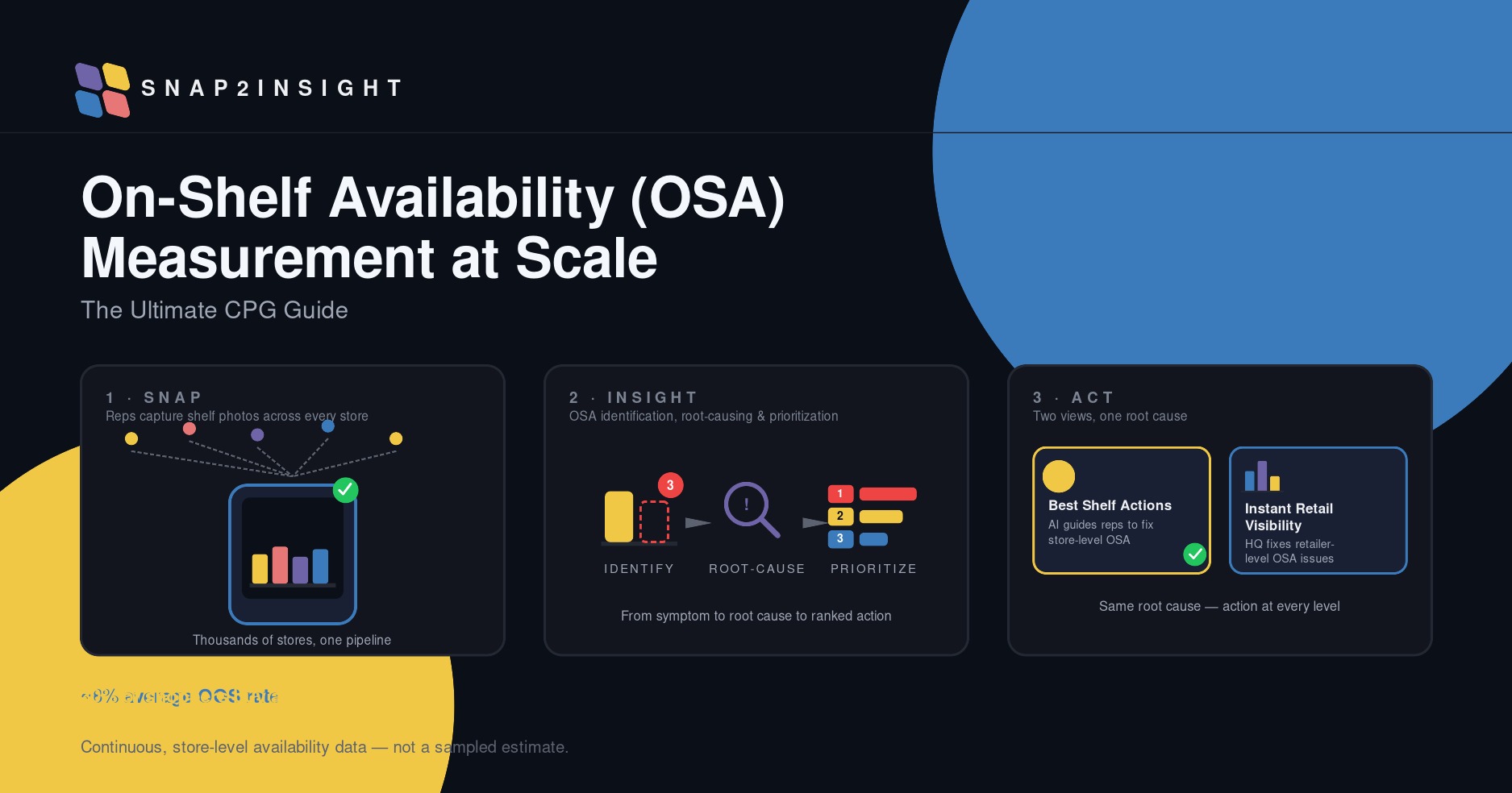
How to Perform On-Shelf Availability (OSA) Measurement at Scale: The Ultimate CPG Guide
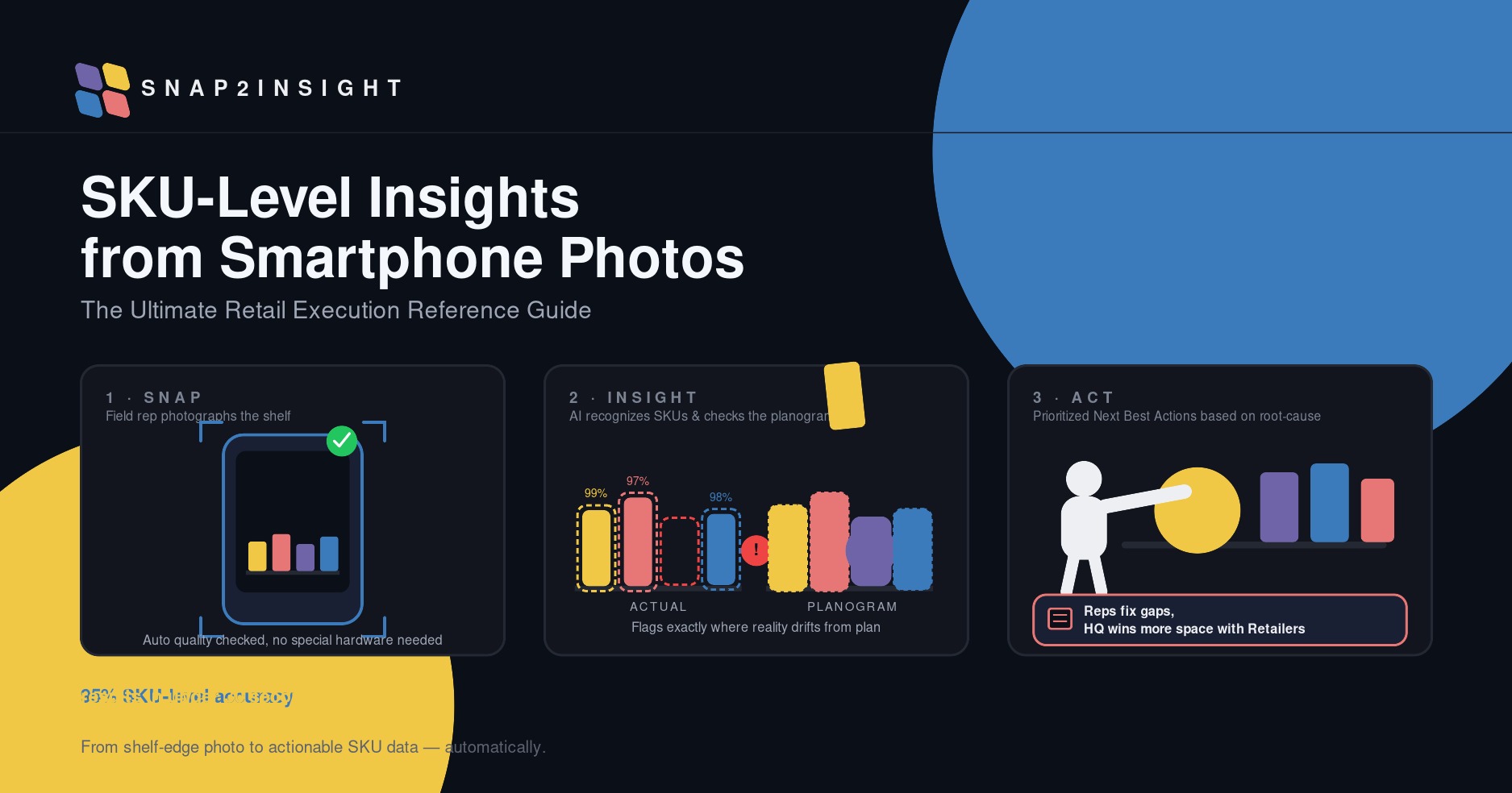
SKU-Level Insights from Smartphone Photos: The Ultimate Retail Execution Reference Guide
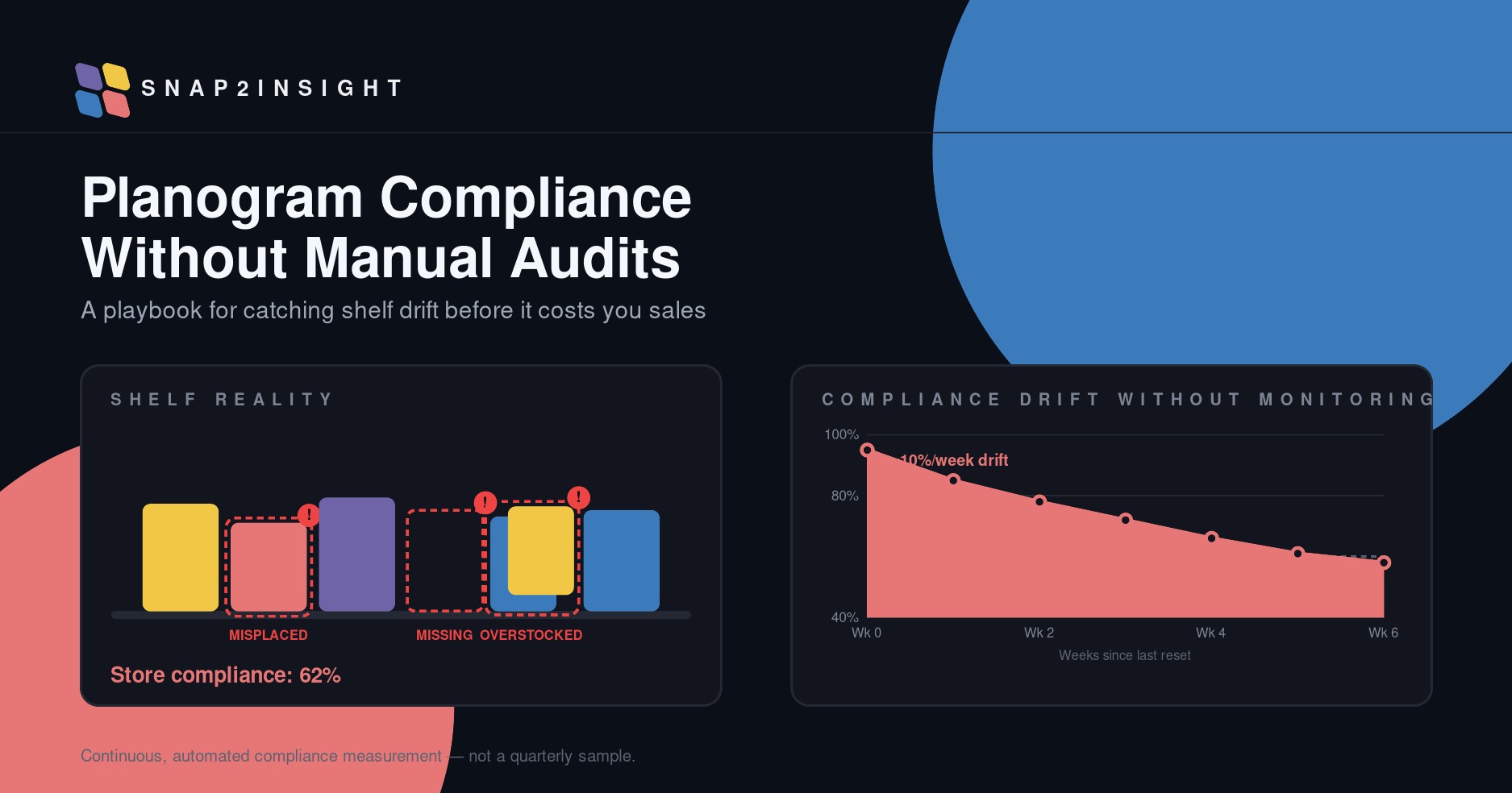
Planogram Compliance Without Manual Audits: A Playbook
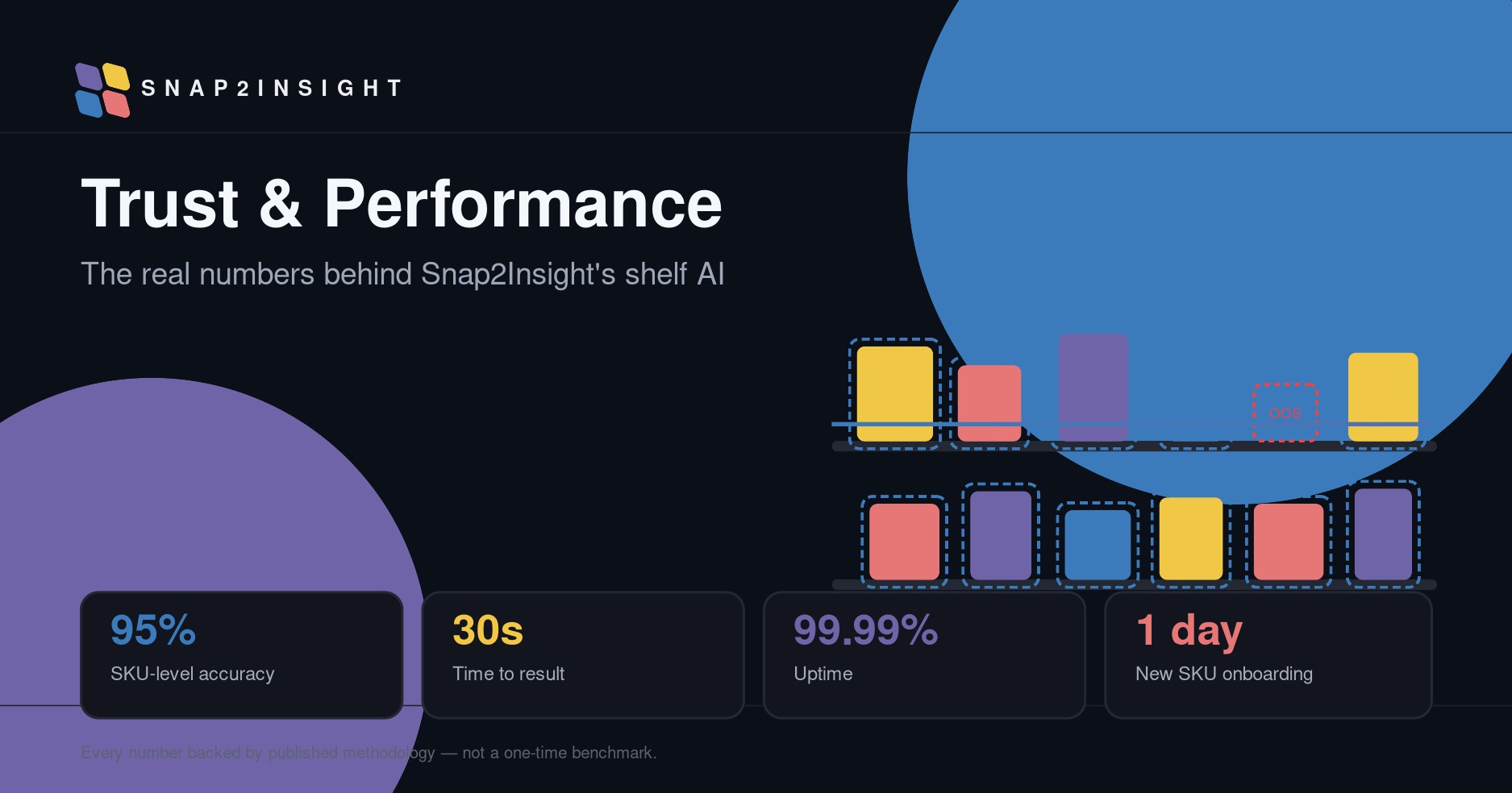
Trust & Performance: The Real Numbers Behind Snap2Insight's Shelf AI
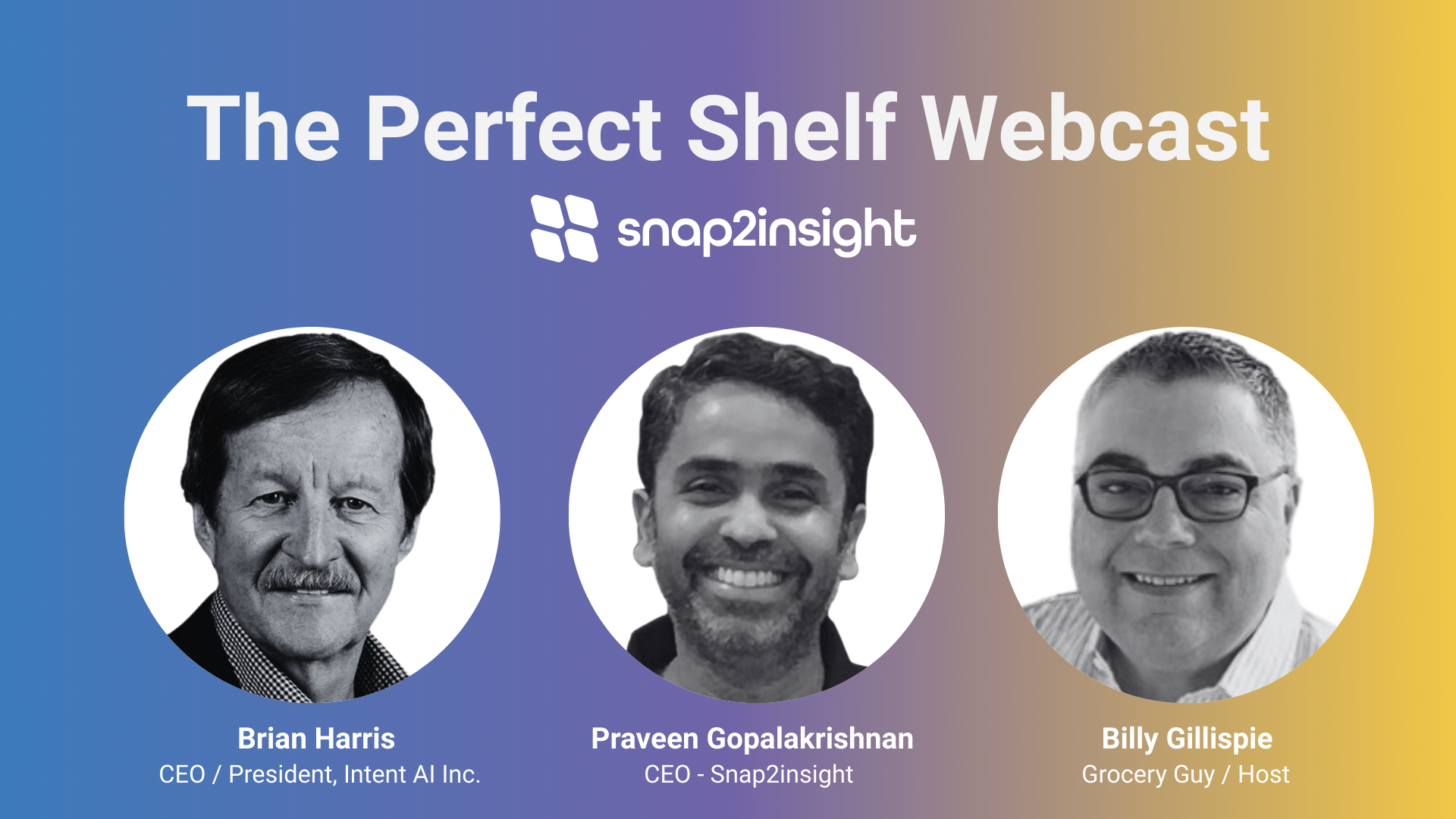
How AI makes the Perfect Shelf possible at Retail
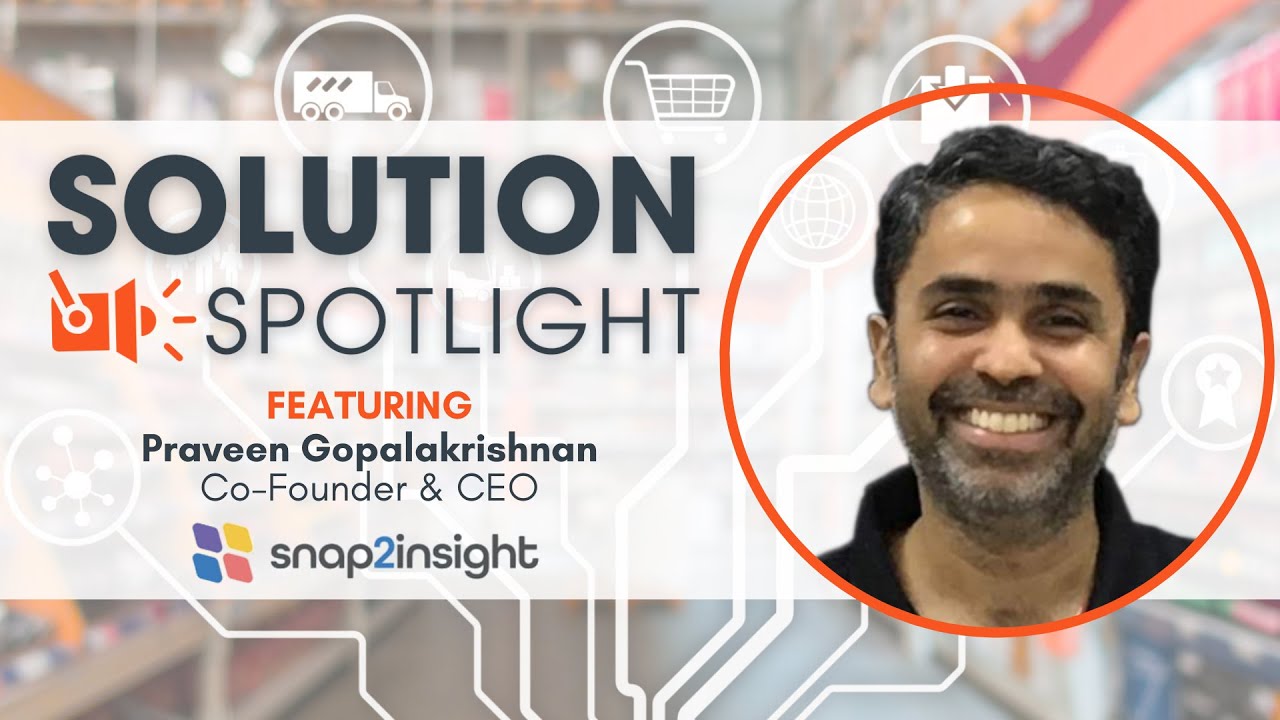
AI-Powered Shelf Visibility: How Snap2Insight Is Transforming Retail Execution

Checklist: Is Your Brand Ready for AI-Powered Retail Merchandising?

How AI Transforms CPG Revenue Growth Management: Smarter Insights for Optimized Retail Execution
Need Help Getting Started?
Talk to our team at Snap2Insight to explore how AI-powered shelf intelligence can elevate your brand’s retail presence.